Issue 04 · October 2026
SWA Insight · October 2026 — the live issue, with links and sources:Read online · Subscribe free · Forward to a colleague
SWA Insight · October 2026 · Issue 04

Flights after the work: October’s lessons for risk owners.

Two fatal accidents followed flights that were not routine: a production test flight in France and a training flight sharing the sky with a maintenance flight in Oregon. A third, in Yosemite, involved equipment adjusted earlier the same day. What risk owners should check now.

Share this issue

In this issue

  1. 01This month at a glance
  2. 02Major accidents & incidents
  3. 03Regulatory & compliance
  4. 04Manufacturer & industry
  5. 05Safety data & trends
  6. 06What to ask your operators
  7. 07Spotlight
  8. 08Looking ahead
  9. 09What we've been up to
29 OctR22 and AS350 B3 collided in Oregon; three people killed
1 OctElixir production test flight, France: two killed; the FAA prohibited flight of all Elixir aircraft
2.2airline accidents per million departures in 2025, down from 2.6 (ICAO)
4fatal airline accidents in 2025, down from 10 (ICAO)
01

This month at a glance

The one-minute version.

October 2026 brought three fatal accidents that sit outside routine flying. On 1 October ↗ an Elixir aeroplane on a production test flight lost a flap and deployed its airframe parachute at low height; two people died. On 29 October a Robinson R22 on an instructional flight and an Airbus AS350 B3 on a maintenance flight collided in Oregon, killing three. The NTSB preliminary report on the Yosemite AS332 L1 ↗ (accident 20 September) records that mechanics had adjusted the water bucket earlier that day. Regulators moved quickly: the FAA prohibited flight of all Elixir aircraft, and directives followed on the AW139, H160, Bell 429 and AW169. ICAO’s 2026 report shows airline accident numbers falling in 2025, but fatalities rose. No cause has been determined in any of the three accidents. For risk owners the question is how the flights after maintenance, test and training flights are controlled.

02

Major accidents & incidents

Verified facts only. No speculation on cause.

Forested mountain ridge in smoke haze at low sun, tall conifers and a single power line in soft focus (no people, no aircraft)
Look at what sits under the flight path before the task starts. (AI / illustrative only)

Elixir light aeroplane, Rochefort (Charente-Maritime), France (1 October)

The BEA is investigating an accident to an Elixir, F-WZAG ↗ (file BEA2026-0441) on a production test flight. AVweb reports ↗ that the left flap detached, the airframe parachute deployed at low height and two people died. The FAA states the cause is under investigation. No cause has been determined.

Robinson R22 and Airbus AS350 B3, McMinnville area, Oregon, USA (29 October)

The two helicopters collided at about 2:10 pm. AVweb reports ↗ that the R22 was on an instructional flight with an instructor and a student, the AS350 B3 was on a maintenance flight with one pilot, and all three people died. OPB reports ↗ that the FAA and NTSB are investigating. A preliminary report is expected in about 30 days. No cause has been determined.

Airbus AS332 L1, Yosemite National Park, California, USA (20 September; preliminary report released October)

Our September issue reported this accident, in which both pilots were killed during water-bucket drops. The NTSB preliminary report, summarised by AVweb ↗, records an 800-gallon bucket on a 200 ft longline and more than 25 drops earlier that day, after which mechanics tightened the bucket’s air-pressure regulator. On the third drop of the flight, about 1:56 pm, the bucket emptied in about three seconds, the helicopter yawed left at about 4 kt groundspeed, descended at 1,344 ft/min and struck trees at about 8,150 ft. The cargo hook was found locked, consistent with a normal electronic release, and the cockpit voice recorder was recovered. No cause has been determined.

Eurocopter AS350 B2, Chatsworth, California, USA (15 September; preliminary report October)

The NTSB preliminary report WPR26FA345 ↗ covers the news helicopter lost on 15 September. ADS-B shows the helicopter at about 1,700 ft msl (about 800 ft above ground) with visual conditions. The last 29 seconds of recording include horns the report describes as consistent with high main-rotor rpm and low rotor rpm, and other aural advisories. Three people died: the pilot, a passenger and one person on the ground; one other was injured. No cause has been determined.

Boeing 787-9, Munich, Germany (15 August; BFU interim report 28 September)

The BFU interim report on the Vietnam Airlines VN34 overrun records brake inputs during the take-off run ↗ and rotation below the calculated speed. The cockpit voice recording from take-off was overwritten. The BFU has not said why the brake inputs occurred. This follows our September report on the event.

On the grapevine

Reported elsewhere, not yet independently verified by us. Status: pending validation — confirmed or dropped next edition.

Airbus A380, Munich, Germany (17 August)

The BEA database lists the Lufthansa A380 event, in which approach lights were reported struck, as a serious incident under BFU responsibility (file BEA2026-0364). Details come from aviation news sites only. InsideFlyer ↗

Pending validation

How we use the terms. Accident, serious incident and incident are used as defined in ICAO Annex 13 ↗; occurrence is the umbrella term and the word we use while a classification is unsettled. The investigating authority’s classification prevails. We avoid “crash” and name no cause or fault while an investigation is open.

03

Regulatory & compliance

Rules, directives and decisions that change what you must do.

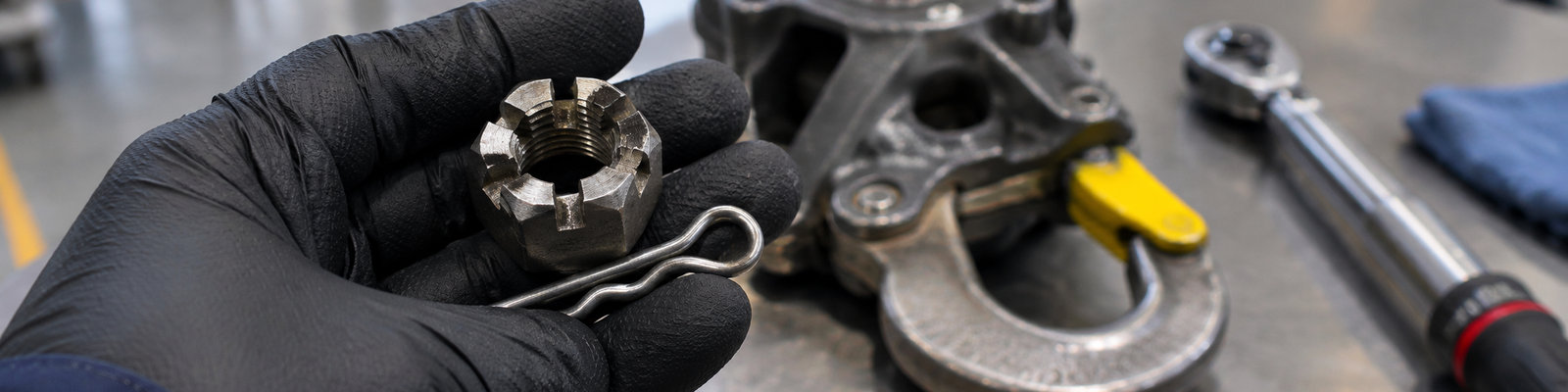
Gloved hand holding a cargo-hook barrel nut and retainer with no bolt fitted, hook assembly blurred behind
A directive tells you what to inspect. Ask what else left the factory unchecked. (AI / illustrative only)

FAA prohibits flight of all Elixir aircraft (AD 2026-21-01, effective 14 October)

AD 2026-21-01 ↗ applies to all Elixir Aircraft Model Elixir aeroplanes and states it was prompted by a fatal accident during a production flight, with the cause still under investigation. Further flight is prohibited until corrective actions are performed by an FAA-approved method. It follows EASA Emergency AD 2026-0191-E of 2 October and Elixir alert service bulletin ASB-633-005-R01. The FAA estimates three aircraft on the US register; comments close 27 November.

AW139 tail-rotor drive shaft directive (AD 2026-20-07, effective 16 October)

AD 2026-20-07 ↗ follows EASA AD 2026-0165 of 18 August. A clamp on the nozzle exhaust duct separated and came to rest on the tail rotor drive shaft. The AD requires an initial inspection within 25 flight hours; the FAA estimates 57 US helicopters. Comments close 16 November.

H160-B proposed directive on window jettison

The NPRM (docket FAA-2026-11806) ↗ addresses blocked window jettison: fire-retardant residue on the jettison rope can stop the window releasing. The FAA estimates 17 aircraft; comments close 27 November.

Transport Canada and EASA: tail-rotor and cargo-hook inspections

Transport Canada CF-2026-50 ↗ (effective 23 October) covers the Bell 429 tail-rotor pitch-link spherical bearing, found missing its hard coating. Inspection is due before 150 hours (within 30 hours if the part is at 120 hours or more), then every 110 hours. EASA AD 2026-0187 ↗ (effective 13 October) covers AW169 cargo-hook barrel nuts and retainers found without bolts on the assembly line, with inspection within 850 flight hours or 25 months.

04

Manufacturer & industry

Fleet issues, directives and supplier news.

Large electronic tool chest with quality tools laid on a matt in the foreground; an engineer on a stand works on an H145 out of focus; the hangar is lit, clearly night outside the open door
Count the tools out as carefully as you counted them in. (AI / illustrative only)

Quality escapes reach operators through the supply chain

Two of this month’s directives trace to how parts were made or assembled, not to wear in service. The Bell 429 bearing ↗ left its sub-supplier without the hard coating, and the AW169 hook assembly ↗ was released with bolts missing. Neither directive says how the defect was missed. The practical point for a company contracting helicopters: a directive sets the minimum, so ask how the operator checks new and overhauled components and assemblies at receipt.

Elixir fleet grounded within days

EASA grounded the Elixir fleet on 2 October as a precaution, and the FAA's AD ↗ followed, effective 14 October. Elixir had already issued an alert service bulletin on 2 October. The sequence shows how fast a manufacturer, an authority and operators must act while the cause is unknown. Ask your operators how they would learn of, and act on, an emergency directive outside office hours.

05

Safety data & trends

What the numbers say — and their scope.

ICAO’s 2026 Safety Report covers scheduled commercial air transport above 5,700 kg maximum take-off mass in 2025. It does not cover helicopter, business, general aviation or military flying, so it says little about the operations in this issue. The four charts show what ICAO published.

2.6020242.202025
Accident rate

Accident rate, scheduled air transport

accidents per million departures
Source ICAO 2026 Safety Report
Scope Scheduled commercial air transport, aircraft above 5,700 kg MTOM, as defined in the ICAO 2026 Safety Report. Excludes helicopter, business aviation, general aviation and military operations.
Period 2024 and 2025
Note Rates are as published by ICAO. Year-to-year changes in a small number of events should be read with care.
9585All accidents104Fatal accidents
20242025

Accidents and fatal accidents

number of accidents
Source ICAO 2026 Safety Report
Scope Scheduled commercial air transport, aircraft above 5,700 kg MTOM, as defined in the ICAO 2026 Safety Report. Excludes helicopter, business aviation, general aviation and military operations.
Period 2024 and 2025
Note The fatal accident rate fell from 0.27 to 0.11 per million departures.
296387Fatalities
20242025

Fatalities

fatalities
Source ICAO 2026 Safety Report
Scope Scheduled commercial air transport, aircraft above 5,700 kg MTOM, as defined in the ICAO 2026 Safety Report. Excludes helicopter, business aviation, general aviation and military operations.
Period 2024 and 2025
Note One accident in 2025 accounts for 260 of the 387 fatalities. The fatality rate rose from 65 to 78 per billion passengers.
Runway excursions7Mid-air collisions4Controlled flight into terrain1Runway incursions0
2025 accidents

2025 accidents in ICAO high-risk categories

accidents
Source ICAO 2026 Safety Report
Scope Scheduled commercial air transport, aircraft above 5,700 kg MTOM, as defined in the ICAO 2026 Safety Report. Excludes helicopter, business aviation, general aviation and military operations.
Period 2025
Note One of the seven runway excursions was fatal. ICAO reports the mid-air collisions as nearly 15% of fatalities.

Fewer accidents, more deaths

Accidents fell from 95 to 85 and fatal accidents from 10 to 4, but fatalities rose from 296 to 387. ICAO ↗ notes that one accident killed 260 people. A falling rate and a rising toll can both be true when a few events carry most of the deaths.

Runway excursions lead the high-risk categories

Seven of the 2025 ICAO-reported accidents ↗ were runway excursions, one of them fatal. Our September issue examined an overrun at Miami; a runway-end margin is a question for contract owners at every airport their aircraft use.

What the data does not show

Everything above, from ICAO ↗, covers scheduled airline flying. Helicopter, test, training and maintenance flights, the subject of this issue’s Spotlight, sit outside it, and no equivalent global rate is published for them. Ask your operators what they record themselves.

06

What to ask your operators

For the companies and BARS Member Organisations that contract aviation.

Flight test card and maintenance release on a clipboard, an AS350 helicopter on the apron blurred behind
Ask who plans the flight after the work and who else knows it is happening. (AI / illustrative only)

Questions a company or BARS Member Organisation can put to the operators it contracts, drawn from this month’s issue.

VERIFYDoes it work here, today?

Acting on directives and supplier quality

How does the operator learn of new directives and quality escapes, who decides what is inspected, and how is a new or overhauled part checked on receipt?

BARSCAO v11 · Control 10.4 Supply of Spares; Common Control 1.13 Aircraft Operator SMS
PRIORITISEWhat matters most?

Training and test flights near your sites

Where do the operator’s training, test and maintenance flights operate relative to your sites and routes, and how are they separated from contracted flying?

BARSCAO v11 · Control 9.2 Air Traffic Control (ATC) Oversight; Control 9.4 Traffic Collision Avoidance System (TCAS)
CONTROLWhat keeps it working?

Planning the flight after maintenance

Who authorises and plans a check flight after maintenance, what profile and crew does it use, who else is told it is happening, and where is it recorded?

BARSCAO v11 · Common Control 1.15 Operational Risk Assessment; Control 10.10 Critical Maintenance Tasks and Independent Inspections

Equipment adjusted on the day

When equipment has been adjusted or repaired earlier the same day, what check or re-brief is required before flying the next task, and who can stop it?

BARSCAO v11 · Control 23.4 Standard Operating Procedures; Common Control 1.15 Operational Risk Assessment
ASSUREIs it still working?

Independent inspection and tool control

Which maintenance tasks are classed as critical, who carries out the independent inspection, and how are tools and fasteners counted out of the aircraft?

BARSCAO v11 · Control 10.10 Critical Maintenance Tasks and Independent Inspections; Common Control 1.6 Maintenance Personnel Qualification
07

Spotlight

Flights after the work: check, test and training flights carry the least-rehearsed risk.

A flight that follows work on the aircraft is the first flight with that work in service. Treat it as a task of its own.
A small training helicopter hovering low over a grass field edge, a maintenance hangar and a second helicopter on its apron blurred behind
Ask where the training, test and maintenance flights fly, and who knows they are there. (AI / illustrative only)

What we know and do not know. The BEA, the NTSB and the FAA have determined no cause for any of this month’s accidents. The Elixir flight was a production test flight. The Oregon helicopters were on an instructional flight and a maintenance flight. The Yosemite preliminary report records that mechanics adjusted the bucket’s regulator earlier that day. We draw no conclusion from any of it, only a question about how such flights are controlled.

Non-routine flights are easy to under-plan. A check flight after maintenance, a test flight or a training flight rarely has a customer waiting, a schedule to defend or a standard task card. It can slip below the operator’s normal risk assessment, and a contract owner usually never sees it. Yet it is the flight that proves work done on the aircraft, often with one pilot and no one to share the workload.

Others in the sky may not know. The Oregon accident involved two helicopters on flights outside a normal passenger schedule. A company that sends aircraft to a site may have little idea what else the operator, a flying school or a maintenance organisation is flying in the same area. Ask where these flights operate and how they are separated from contracted flying.

The factory and the hangar are part of the flight. Two directives this month concern parts and assemblies released with defects: a coating missing from a bearing and bolts missing from a hook assembly. A third followed a clamp that separated and rested on a drive shaft. Independent inspection of critical tasks, tool control and receipt checks are what stand between a defect and the first flight. Ask the operator to show them working.

Six controls to verify for check, test and training flights

Mapped to BARS (CAO v11) · SWA services
VERIFYDoes it work here, today?
PRIORITISEWhat matters most?
CONTROLWhat keeps it working?
ASSUREIs it still working?
1
CONTROL

Plan the flight after work as a task of its own

Ask for the procedure: who authorises a check or test flight, what profile and crew it uses, whether passengers are excluded, and where it is risk assessed. Ask for the last three check-flight records.

BARSCAO v11 · Common Control 1.15 Operational Risk Assessment; Control 23.4 Standard Operating Procedures
SWAAviation governance systems
2
ASSURE

Test independent inspection of critical maintenance tasks

List the tasks the operator treats as critical and have a second person’s sign-off checked against the job cards for a sample of recent work. Ask how tools and fasteners are counted out of the aircraft.

BARSCAO v11 · Control 10.10 Critical Maintenance Tasks and Independent Inspections; Common Control 1.6 Maintenance Personnel Qualification
SWACritical control verification
3
VERIFY

Check what the operator does with directives and supplier defects

Ask how directives and manufacturer bulletins reach the operator, who assesses them for the fleet, and how new and overhauled parts are inspected on receipt. Sample a recent directive from receipt to closure.

BARSCAO v11 · Control 10.4 Supply of Spares; Common Control 1.13 Aircraft Operator SMS
SWAOperational reviews
4
PRIORITISE

Map the other flying near your sites

Ask where the operator’s training, test and maintenance flights operate, and which other organisations fly near your sites. Put assurance effort on sites with the most mixed flying and the least air traffic service.

BARSCAO v11 · Control 9.2 Air Traffic Control (ATC) Oversight; Common Control 1.15 Operational Risk Assessment
SWAAviation exposure baseline and risk profile
5
CONTROL

Require a stop-and-brief after equipment is adjusted

Set a rule that adjusted or repaired equipment, such as a bucket regulator, is checked and the crew re-briefed before the next task, and that any crew member can stop it without penalty.

BARSCAO v11 · Control 23.4 Standard Operating Procedures; Common Control 1.15 Operational Risk Assessment
SWAAviation training (MCAR, helicopter external load)
6
ASSURE

Report anomalies from non-routine flights

Ask the operator to report every warning, abnormal indication and adjustment found on check, test and training flights, and to tell you of any that touch your contract.

BARSCAO v11 · Common Control 1.14 Accident and Incident Notification; Common Control 1.13 Aircraft Operator SMS
SWASpecialist aviation advisory

Critical controls that matter this month

Two of the five critical controls bear on this topic. Weather, Infrastructure and Fuel do not feature.

Aircraft

Two directives this month trace to defects introduced in manufacture or assembly, and the Yosemite report records an adjustment made the same day. Ask what independent inspection, tool control and post-work checks the operator applies, and who decides a check flight is needed.

BARSCAO v11 · Control 10.10 Critical Maintenance Tasks and Independent Inspections; Control 10.4 Supply of Spares
Personnel

The Oregon maintenance flight had one pilot, and the Oregon training flight carried an instructor and a student. Ask who is qualified to fly check and test flights, whether a second crew member is used, and how workload is managed on those flights.

BARSCAO v11 · Common Control 1.4 Flight Crew Qualifications, Experience and Recency; Common Control 1.5 Flight Crew Check and Training
Close the loop

Inside your own organisation, make the person who owns the helicopter contract responsible for finding out about every check, test and training flight the operator plans at or near your sites, and for reporting directives, deferred defects and equipment adjustments that affect your flying to the executive who accepted the risk. Send the decisions back to the site, project and logistics managers who book flights, so no task is added on a day the operator has told you work or testing is under way.
08

Looking ahead

Dates for the diary.

3 NovFlight Safety Foundation webinar: Learning From All Operations, moving from theory to practice. FSF events ↗
10–12 Nov79th International Aviation Safety Summit, Montreal. FSF events ↗
16 NovComment deadline on FAA AD 2026-20-07, AW139. Federal Register ↗
27 NovComment deadline on the Elixir AD and the H160-B proposed directive. Elixir AD ↗
Late NovNTSB preliminary report on the Oregon helicopter collision expected, about 30 days after the accident. AVweb ↗
09

What we've been up to

From the team, in one adviser's voice.

SWA this month

MCAR planning, client delivery and ICAM investigation training.

Image to be supplied
Adviser photo: a landscape photo of you at work, or head and shoulders
Adviser photo [Adviser: add your photo here and replace this line with a short caption.]

October was a month of client delivery and training. We joined planning sessions with Flight Safety Foundation on delivering our MCAR programme in Canada, and kept up the fortnightly team catch-up and regular aviation services meetings with an international resources client. That client also held two launch calls for its new aviation standard, which we attended. Our team ran two days of ICAM investigation training, held a catch-up on a gap assessment and scope of services for another client, and took a first call with an operator interested in working with us.

[Add your own comment on this month’s Spotlight section. Relate it to your past experience and highlight the relevant BARS clauses, critical controls and any recurring themes you see in the field.]

[Say where you have been this month and highlight a task or two (keep it non-specific). Summarise any interesting learnings, observations, recurring themes or outcomes. Finish on a positive reflection or suggestion.]

Mark WheatleySenior Aviation Risk Adviser, CPRM
Start the conversation

Questions about your aviation risk? Talk to us.

If something in this issue touches your operation, we are happy to talk it through — no obligation. Tell us the aircraft, the task and the contract, and we will tell you where we would look first.

Safety Wise International Pty Ltd · ABN 38 697 202 172
Read this issue online

General information only, not professional or legal advice. Safety Wise Aviation has taken care to verify the content from the sources cited, but does not warrant completeness or accuracy and accepts no liability for reliance on it. Investigations are ongoing in several events described; facts may change. Check the primary sources and your own regulator before acting.

Found this useful? Send it to a colleague.EmailLinkedIn